What it is
Spontaneous remission is the partial or complete disappearance of a disease without medical treatment adequate to explain it. It is rare but real, and it is documented across the medical literature — most famously in Everson and Cole’s 1966 survey of regression in cancer, and steadily since in renal-cell carcinoma, melanoma, lymphoma, neuroblastoma, and acute myeloid leukemia.
It is the single most common natural rival to a healing claim, because the bar a miracle has to clear is not “did the person recover?” but “did the recovery exceed what the body, unaided, is known to do?”
How it actually works
The recoveries that once looked inexplicable increasingly have names. Infection-triggered remission — a fever or sepsis rousing natural-killer cells and cytotoxic T-lymphocytes that turn on a tumor — is the established, authors-endorsed mechanism behind several leukemia regressions. Withdrawal of an immunosuppressing drug can release tumor-specific immunity. In aplastic anemia, blood stem cells that shed the targeted self-antigen (loss of heterozygosity) can evade the immune attack and repopulate the marrow.
The same logic covers “the natural course” of conditions whose prognosis was grimmer on paper than in the body, and end-of-life phenomena like terminal lucidity — a brief, real return of clarity that neurology fully expects to explain once it can measure it.
What it explains well — and where it stops
It explains cancers that regress, infections that clear, and recoveries no clinician predicted. Rarity is not the same as impossibility, and a one-in-ten-thousand outcome still happens to one person in ten thousand.
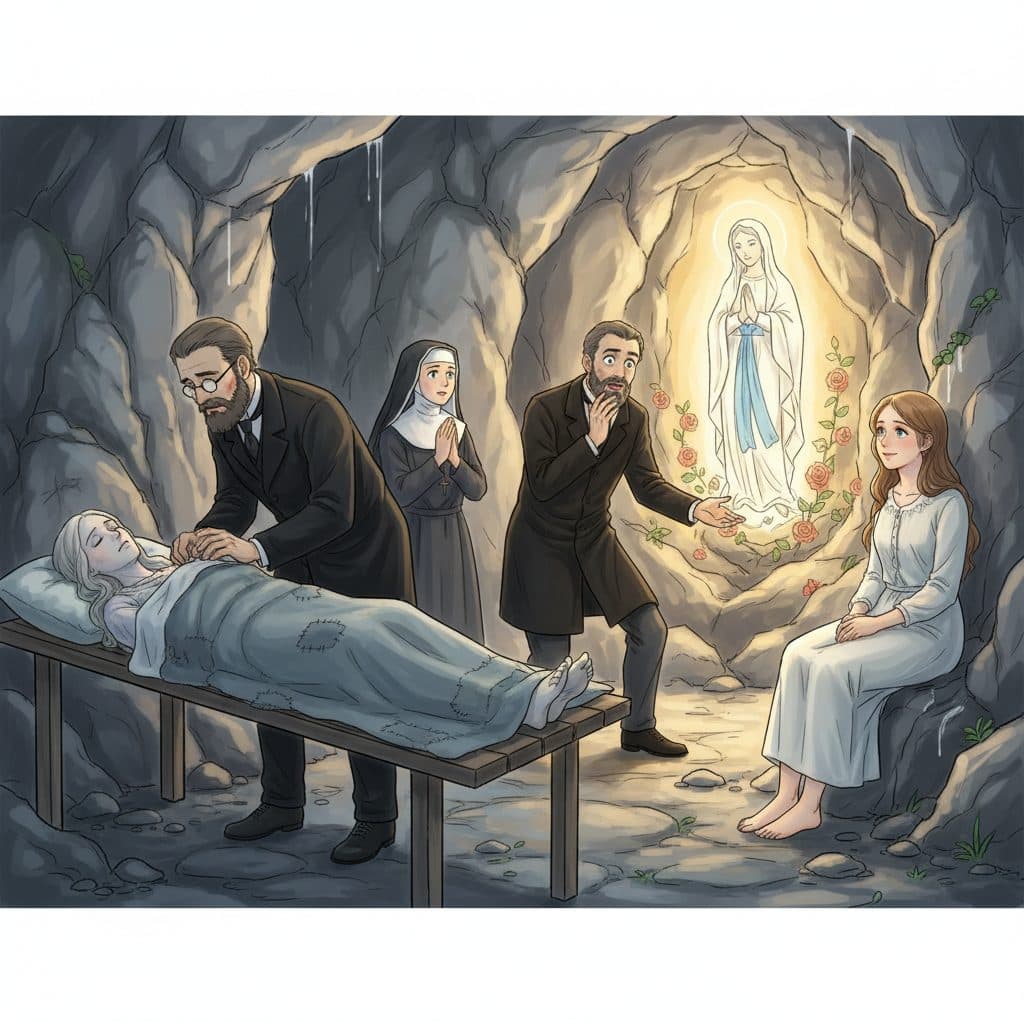
Where it weakens: when the timing tracks a specific prayer, relic, or shrine visit with a precision chance struggles to produce; when the regression is otherwise unprecedented for that disease; and when independent physicians document the before-and-after to a standard that rules out the ordinary explanations below. Cases like those are why some entries here remain Unproven rather than Explained — we do not pretend a mechanism exists just because one usually does.
How this rival is scored here
On the Evidence meter, a strong natural-course rival pulls a healing toward “Explained” — but only as far as the documentation lets it. A solid mechanism plus a shaky original diagnosis is a different verdict from a solid mechanism against an airtight one.
How we rate →