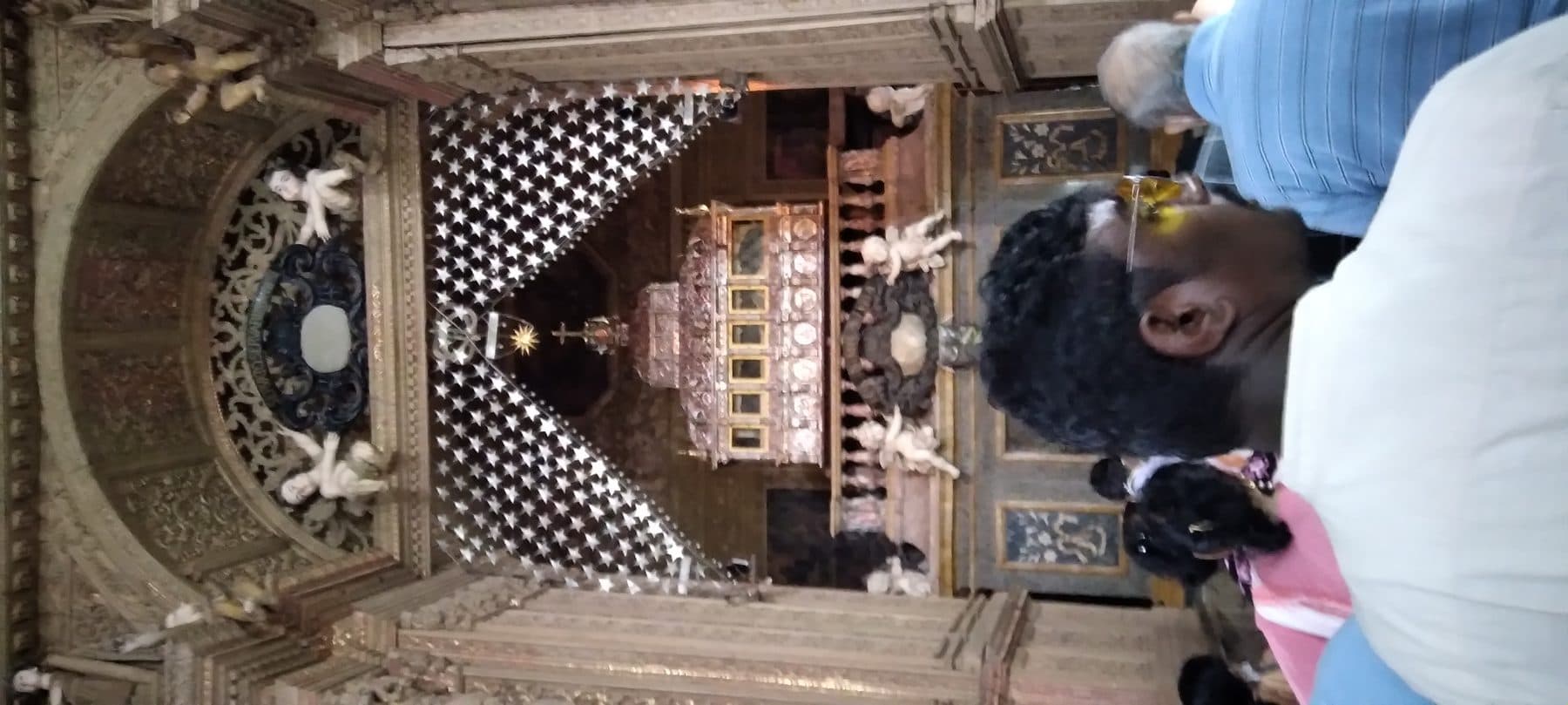
The Incorrupt Body of Francis Xavier in Goa
Photo: RoyenFernandes / Wikimedia Commons · CC BY-SA 4.0
The story
Skip to the verdict ↓The body of Francis Xavier was declared incorrupt when returned to Goa in 1554, two years after his death, and remains on public display at the Basilica of Bom Jesus -- though the body has visibly deteriorated and lost limbs over centuries.
When Xavier died on the island of Sancian in December 1552, his companions buried him initially in quicklime to allow potential later disinterment. The body was exhumed in February 1553 and found in good condition. After further transport through Malacca to Goa, it arrived in 1554 to extraordinary crowds. Jesuit physicians and witnesses examined the body and reported it fresh, undecayed, and sweet-smelling two years after death.
The witnesses were Jesuits who regarded Xavier as a saint.
In 1554, a Portuguese noblewoman reportedly bit off a toe. In 1614, the right arm was amputated and sent to Rome at the Pope's request, where it remains. The body has been exposed to air periodically during public expositions. What remains in the silver coffin at Bom Jesus is described by modern visitors as a shrunken, mummified figure.
It happened — and nature accounts for it.
Reviewer Notes
Miracles Jar weighs each claim two ways — how extraordinary it would be, and how strong the evidence is.
Assessed by Miracles Jar AI
Preservation was genuine but explicable by natural processes; current state of the body contradicts original incorruption claims.
Preservation was genuine but explicable by natural processes; the current state of the body contradicts the original incorruption claims.
Xavier's body was transported from Sancian to Malacca and then to Goa over two years, which involved repeated temporary burial in quicklime. Independent examination in the 1550s by Jesuit physicians found the body in good condition; witnesses described it as fresh and sweet-smelling. Those contemporary accounts from 1554 — dating from within a few years of the event, written by educated observers, and describing conditions that could in principle be verified — are the most credible element of the Xavier incorruption tradition. The Jesuit witnesses regarded Xavier as a saint and had strong institutional reasons to interpret good preservation as miraculous rather than natural, which is worth keeping in mind when weighing their reports.
The body's subsequent history tells against any miraculous interpretation. One arm was removed and sent to Rome in 1614; the body is now described by modern visitors as a shrunken, mummified figure. The transition from "incorrupt" to "mummified relic" over centuries is consistent with natural processes: quicklime treatment at Sancian provided an initial preservative effect, and the dry climate of Goa is conducive to mummification. True incorruption, as the tradition claims it, would not involve progressive deterioration; the body behaves as naturally preserved organic matter whose exceptional early condition was interpreted through a theological lens, then maintained by the institutional prestige the relic had accumulated.
Incorruption claims are common in relic-cult tradition and typically rely on the initial examination rather than sustained unchanged preservation over centuries. The Xavier body fits that pattern.
Evidence ledger — what the verdict rests on
Contemporary Jesuit witnesses in Goa (1554) described the body as fresh and sweet-smelling two years after death
Witnesses were committed believers with strong motivation to interpret good preservation as miraculous
Xavier's body was buried in quicklime at Sancian, which can accelerate or preserve tissue; the dry tropical conditions of Goa are also conducive to mummification
Natural preservation mechanisms existed at every stage of the body's journey
The body has visibly deteriorated over centuries and limbs have been removed; the current state contradicts the original 'incorrupt' claims
True incorruption would not involve progressive deterioration; the body behaves as naturally preserved organic matter
What would raise the meter: Long-term follow-up documenting permanence, in a condition with a near-zero spontaneous-resolution base rate, would raise the meter.
What would lower it: A documented relapse, or case literature showing the condition fluctuates or remits on its own, would move it down.
How we weigh every claim — the full method, deductions and all →
The natural explanation
The leading natural account for this case is spontaneous remission & the body's own recovery. Read what it explains — and where it stops.
Sources
Tagged by proximity to the event. Primary sources are direct or contemporaneous; tertiary are downstream retellings.
- 1.Primarytestimony
Jesuit missionaries in Goa, "Jesuit mission correspondence (Goa, 1554-1556)", 1554-1556· no public link
Contemporary Jesuit accounts describe the body's condition at arrival in Goa; closest contemporary documentation of the incorruption claim
- 2.Tertiarychurch document
Catholic Connect, "Miracles and Mysteries Surrounding St. Francis Xavier (Catholic Connect)", 2023· no public link
Summary of the body's documented history including amputations and current state
Cases like this
Nearest on the map — similar in how miraculous they’d be, and how strong the evidence is.