Valeria Valverde: Severe Brain Trauma Resolves After Pilgrimage to Carlo Acutis Tomb
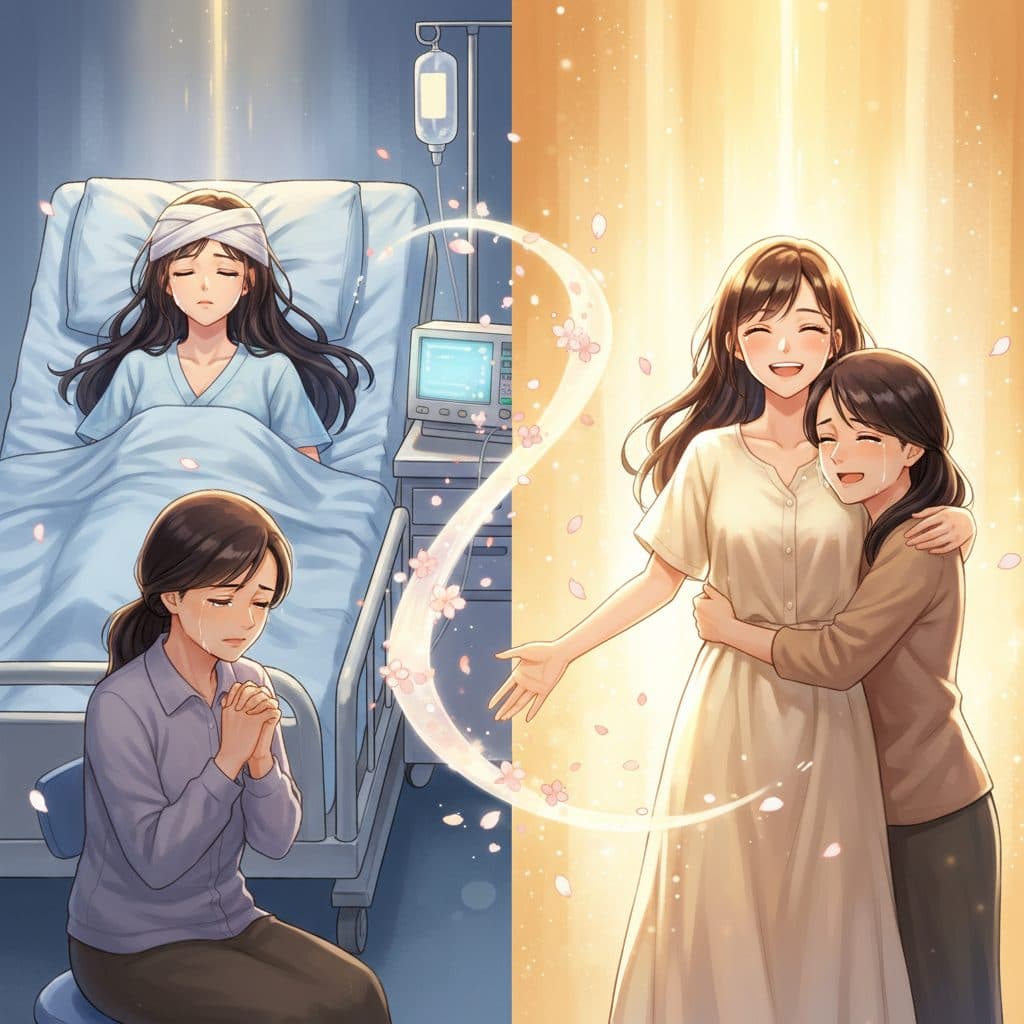
Illustration: AI-generated dramatization (Gemini Flash Image)
The story
Skip to the verdict ↓A Costa Rican student's life-threatening cranial injuries and brain bruising disappeared without trace two months after a bicycle accident in Florence — the miracle for Carlo Acutis's canonization.
On July 2, 2022, Valeria Valverde, 21, a Costa Rican student studying in Florence, suffered a catastrophic head injury in a bicycle accident. She was taken to hospital, underwent an emergency craniotomy to relieve intracranial pressure, and was admitted to intensive care. Physicians told her family she might die at any moment.
Six days after the accident, her mother traveled to Assisi to pray at the tomb of Blessed Carlo Acutis — a Milan-born teenager who died of leukemia in 2006 and had been beatified in October 2020. On the day of the mother's prayer, Valeria began breathing independently. The next day she recovered movement in her upper limbs and partial speech.
Valeria was discharged from intensive care ten days later. Imaging taken at that point showed the brain bruising had completely disappeared. She required only one week of physiotherapy. On September 2, 2022 — two months after the accident — she visited Acutis's tomb in Assisi with her mother. Pope Francis recognized the miracle on May 23, 2024. Carlo Acutis was canonized on September 7, 2025, alongside Pier Giorgio Frassati.
Genuinely contested — both whether it happened and whether nature explains it.
Reviewer Notes
Miracles Jar weighs each claim two ways — how extraordinary it would be, and how strong the evidence is.
Assessed by Miracles Jar AI
Unusually rapid recovery from documented severe TBI — especially the complete imaging resolution — but TBI recovery variability in young adults is real and significant.
This sits roughly at even odds: a genuinely hard case to call.
Reasoning
Valeria Valverde underwent emergency craniotomy for severe traumatic brain injury with intracranial hemorrhage and swelling. Physicians described her prognosis as "could die at any moment." She recovered completely in roughly two months with only one week of physiotherapy — far faster than expected for her injury severity. Brain bruising documented on imaging was reported as completely absent on follow-up imaging. Pope Francis recognized the miracle on May 23, 2024. Against: TBI outcomes are notoriously variable; rapid functional recovery, while unusual for severe TBI, does occur in younger patients, and the "disappearance of bruising" may reflect normal resolution rather than an instantaneous event.
Evidence weighed
- Emergency craniotomy for severe TBI; prognosis described as potentially fatal; brain bruising documented on imaging. Severe TBI requiring craniotomy is a high-acuity injury with significant mortality and morbidity. *(Toward authentic; strong.)*
- Complete recovery in ~two months with only one week of physiotherapy; subsequent imaging showed no residual bruising. Speed of recovery is unusual for the severity described. *(Toward authentic; moderate.)*
- Vatican Dicastery approved the miracle on May 23, 2024. *(Toward authentic; moderate.)*
- Young adults with severe TBI, when they survive the acute phase, can show remarkably rapid and complete neurological recovery — the "young brain plasticity" effect is well documented. This is not an uncommon exception in TBI literature for patients Valeria's age. *(Toward natural; moderate.)*
- The timing improvement began on the same day Valeria's mother prayed at Acutis's tomb — six days post-accident. Temporal correlation is striking but six days post-craniotomy is also when some patients begin to stabilize naturally. *(Neutral; moderate.)*
TBI outcomes in young adults are highly variable. Rapid recovery from severe TBI is uncommon but not unknown, and brain contusions do resolve on imaging as a normal healing process. What makes this case unusual is the combination of injury severity, speed of recovery, and the timing of the inflection point matching the family's prayer. None of these alone is inexplicable; their combination is what the Vatican Dicastery found extraordinary.
Evidence ledger — what the verdict rests on
Emergency craniotomy for severe TBI; prognosis described as potentially fatal; brain bruising documented on imaging.
Severe TBI requiring craniotomy is a high-acuity injury with significant mortality and morbidity.
Complete recovery in ~two months with only one week of physiotherapy; subsequent imaging showed no residual bruising.
Speed of recovery is unusual for the severity described.
Vatican Dicastery approved the miracle on May 23, 2024.
Young adults with severe TBI, when they survive the acute phase, can show remarkably rapid and complete neurological recovery — the 'young brain plasticity' effect is well documented.
This is not an uncommon exception in TBI literature for patients Valeria's age.
The timing improvement began on the same day Valeria's mother prayed at Acutis's tomb — six days post-accident.
Temporal correlation is striking but six days post-craniotomy is also when some patients begin to stabilize naturally.
What would raise the meter: Long-term follow-up documenting permanence, in a condition with a near-zero spontaneous-resolution base rate, would raise the meter.
What would lower it: A documented relapse, or case literature showing the condition fluctuates or remits on its own, would move it down.
How we weigh every claim — the full method, deductions and all →
The natural explanation
The leading natural account for this case is spontaneous remission & the body's own recovery. Read what it explains — and where it stops.
Sources
Tagged by proximity to the event. Primary sources are direct or contemporaneous; tertiary are downstream retellings.
- 1.Secondarychurch document
Catholic News Agency, "Carlo Acutis to Be First Millennial Saint: Pope Francis Recognizes Miracle", 2024· no public link
Confirms May 23, 2024, papal recognition and Valeria's case details.
- 2.Primarytestimony
Rome Reports, "Interview: Mother of the Young Woman Miraculously Saved by St. Carlo Acutis", 2025· no public link
Valeria's mother gives first-person account of the pilgrimage and recovery timeline.
- 3.Secondarywebsite
Stichting Acutis, "Miracles of Blessed Carlo Acutis", 2025· no public link
Foundation site; useful for both beatification and canonization miracle details.
Cases like this
Nearest on the map — similar in how miraculous they’d be, and how strong the evidence is.