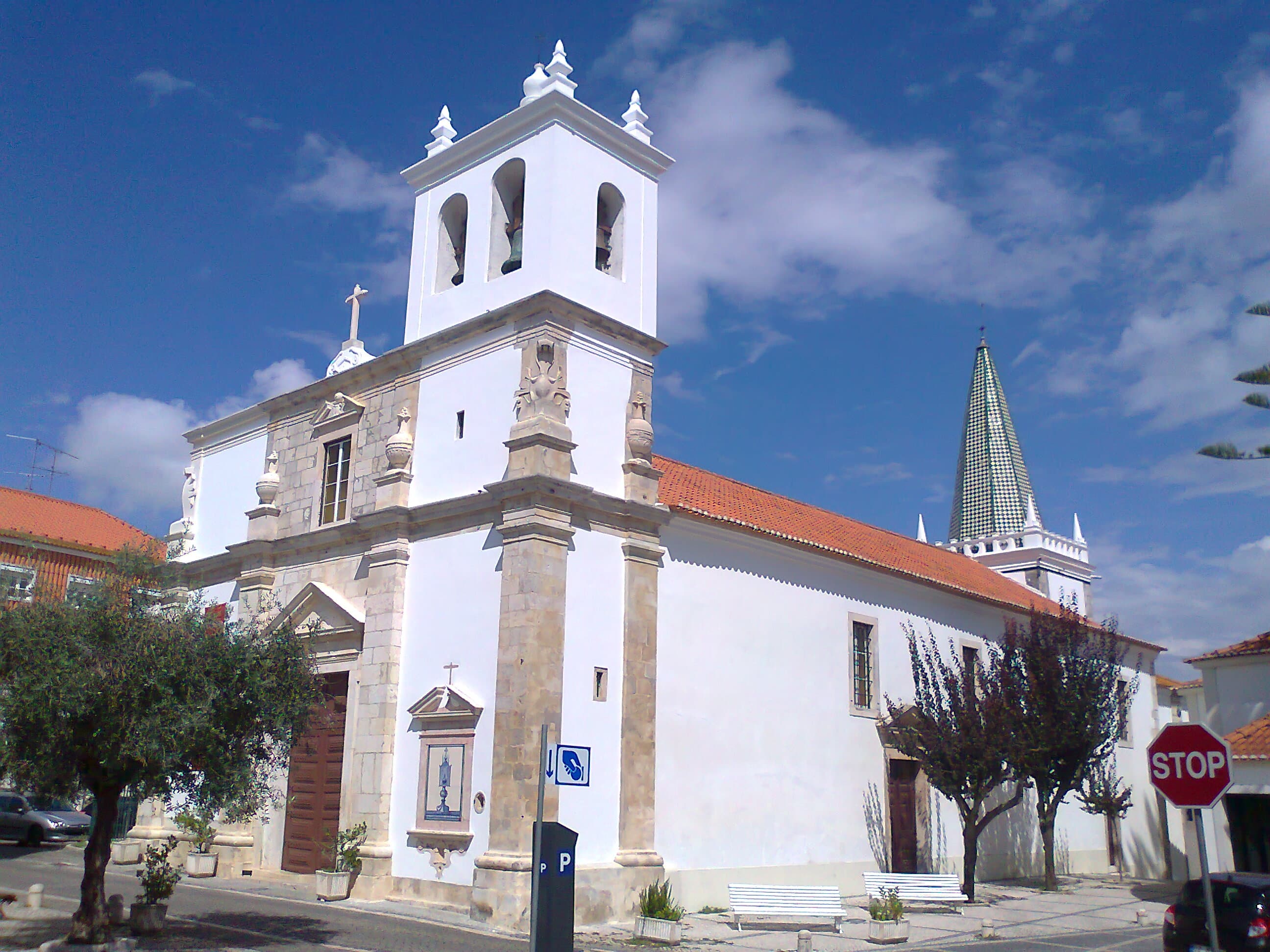
Eucharistic Miracle of Santarém
Photo: GualdimG · CC BY-SA 4.0
The story
Skip to the verdict ↓A 13th-century account describes a consecrated host stolen for a sorceress beginning to bleed, leading to its veneration in Santarém, Portugal, where it is still displayed in a crystal reliquary.
The Eucharistic Miracle of Santarém originates in a medieval account set in Santarém, Portugal. According to that account, a woman who was unhappy in her marriage approached a sorceress, who demanded a consecrated host as part of a spell. The woman stole a host from church during Mass. On her way home the host began to bleed, attracting attention from passersby. The bleeding host was eventually venerated in the Church of St. Stephen — later renamed the Church of the Holy Miracle — in Santarém, where it remains today in a crystal reliquary.
The event is dated variously to 1226 or 1247. The story is first attested in sources from well after the claimed event. Canonical investigations in 1340 and 1612 examined the relic and affirmed its miraculous character; both investigations applied theological rather than empirical criteria.
Historians of medieval religion have identified the "host stolen for witchcraft that begins to bleed" as a narrative type found in 13th–15th-century Europe, appearing with local variations in Italy, France, Germany, and Portugal.
The relic exists and is publicly displayed in Santarém. No histological, chemical, or DNA testing of the relic is on record, and no modern scientific analysis has been published. No chain-of-custody documentation connects the current relic to any specific medieval event.
Too thin a record to say either way.
Reviewer Notes
Miracles Jar weighs each claim two ways — how extraordinary it would be, and how strong the evidence is.
Assessed by Miracles Jar AI
Medieval legend with no scientific analysis; canonical investigations were theological, not empirical.
The event is attested only by late medieval accounts; even the date is disputed between 1226 and 1247 — a gap that reflects the absence of contemporaneous documentation. Canonical investigations in 1340 and 1612 affirmed authenticity but used theological rather than scientific criteria. No chemical or histological analysis of the relic has been published.
On the legend typology: The legend motif — a woman stealing a host for a witch's spell, which then bleeds — is a common medieval trope appearing in multiple European cities. The shared narrative structure weakens the claim of independent historical attestation, raising the question of whether Santarém's account is independent testimony or a localized version of a widespread legend type. This does not prove Santarém's account is fabricated, but it does mean the story's plausibility cannot be assessed independently of this broader cultural context.
Weighing of the evidence:
- The physical relic still exists and is publicly displayed: its existence is not in dispute; its origin and composition are.
- The canonical investigations of 1340 and 1612 affirmed authenticity, though medieval canonical investigation used theological criteria, not scientific.
- The bleeding-host-stolen-for-witchcraft motif recurs across multiple European sites, and the shared narrative structure weakens the claim of independent historical attestation.
- No modern scientific analysis has been published: no histological, chemical, or DNA testing on record.
Bottom line: Without histological, chemical, or DNA testing — and without chain-of-custody documentation connecting the current relic to any specific medieval event — this case rests entirely on faith tradition and medieval canonical authority.
Evidence ledger — what the verdict rests on
Physical relic still exists and is publicly displayed in Santarém
Existence of the relic is not in dispute; its origin and composition are
Canonical investigations in 1340 and 1612 affirmed authenticity
Medieval canonical investigation used theological criteria; not scientific
Bleeding-host stolen for witchcraft is a recurring medieval legend type across multiple European sites
Shared narrative structure weakens the claim of independent historical attestation
No modern scientific analysis of the relic has been published
No histological, chemical, or DNA testing on record
What would raise the meter: Long-term follow-up documenting permanence, in a condition with a near-zero spontaneous-resolution base rate, would raise the meter.
What would lower it: A documented relapse, or case literature showing the condition fluctuates or remits on its own, would move it down.
How we weigh every claim — the full method, deductions and all →
The natural explanation
The leading natural account for this case is spontaneous remission & the body's own recovery. Read what it explains — and where it stops.
The same wonder, across traditions
This claim is one of many that make the same assertion across faiths. See it side by side in Images That Weep, Bleed, and Stir.
Sources
Tagged by proximity to the event. Primary sources are direct or contemporaneous; tertiary are downstream retellings.
- 1.Tertiaryother
"Eucharistic miracle of Santarém — Wikipedia", 2024· no public link
Summary of legend, canonical investigations of 1340 and 1612; en.wikipedia.org/wiki/Eucharistic_miracle_of_Santar%C3%A9m
- 2.Secondarychurch document
"Eucharistic Miracle of Santarém, 1247", 2018· no public link
Church account of the miracle and history of the reliquary; miracolieucaristici.org/en/download/santarem.pdf
Cases like this
Nearest on the map — similar in how miraculous they’d be, and how strong the evidence is.