James Fulton Engstrom: Stillborn 61 Minutes, Full Recovery — Fulton Sheen's Miracle
The story
Skip to the verdict ↓For sixty-one minutes on 16 September 2010, a delivery room in Peoria, Illinois worked over a newborn who had come into the world without a heartbeat, his umbilical cord knotted. In the waiting room his grandfather was praying, naming an old archbishop. The doctors had their hands on the clock, about to call the time.
Then the baby's heart began beating. He was Travis and Bonnie Engstrom's newborn son, delivered still at the hospital — the knotted umbilical cord had cut off his oxygen during delivery — and the physicians who attempted resuscitation for those 61 minutes were about to declare him dead when it happened.
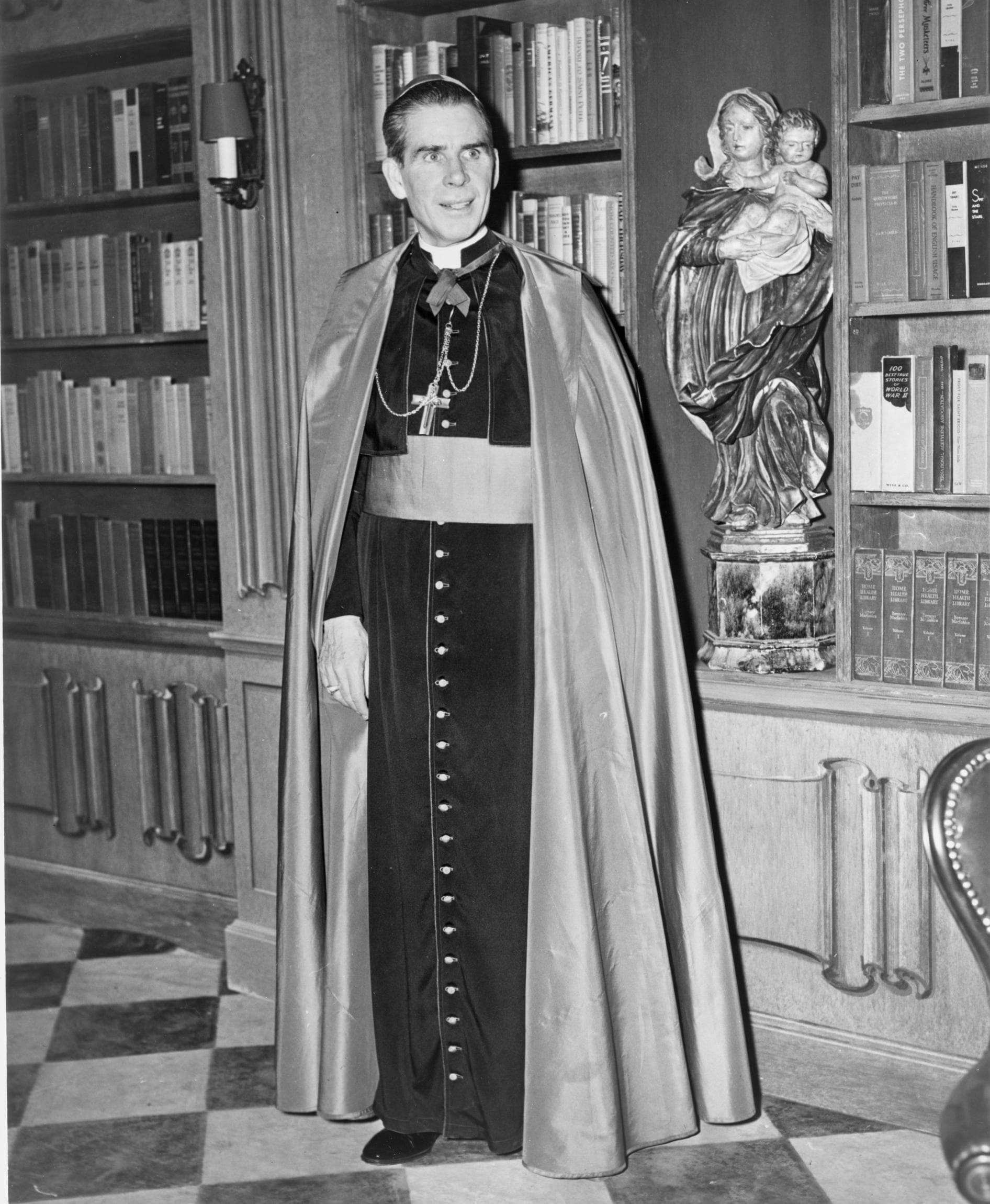
The grandfather praying in the waiting room was Bonnie's father, and the archbishop whose intercession he invoked at the moment resuscitation was about to be abandoned was Fulton Sheen. James Fulton, named in honor of Sheen, survived. Doctors warned the family he had sustained massive organ damage and would likely die; when he did not, they said he would be severely handicapped. His initial MRI showed extensive brain damage. A follow-up scan, which Bonnie describes as taken about twenty-four hours later, was "perfectly clear."
The Account and the Records
The "perfectly clear" description comes from Bonnie Engstrom herself — in a 2019 America Magazine interview ("After James's follow-up M.R.I. showed that his brain was fine we called the Sheen Foundation") and in her memoir, *61 Minutes to a Miracle*. The 61-minute figure traces to the same family and clinical account. No radiologist is named on record, and the scans have not been published. The underlying medical file was turned over to the diocesan tribunal and reviewed by the Vatican medical board (Consulta Medica), which approved the case unanimously on March 6, 2014, rather than released for independent reading. James Fulton's perspective as a teenager was later reported by the National Catholic Register in 2019. The Catholic World Report confirmed the beatification proceeding as of early 2026, per a Diocese of Peoria announcement.
The Medical Context
The 2015 American Heart Association and American Academy of Pediatrics neonatal-resuscitation guideline (Part 13, published in *Circulation*) holds that when a newborn has an Apgar score of 0 and an undetectable heart rate after ten minutes of resuscitation, "it may be reasonable to stop assisted ventilation" — while stressing the decision must be individualized against factors like the timing of the insult and the availability of advanced care. A 61-minute effort is roughly six times that ten-minute reference point.
A 2022 systematic review and meta-analysis in *Neonatology* (Khorram et al.) pooled sixteen studies and 646 neonates who had an Apgar score of 0 at ten minutes of life: about 40 percent survived (95% CI 30–50%), and roughly 19 percent survived without moderate-to-severe neurodevelopmental impairment (95% CI 11–27%) — a figure that has risen in the era of therapeutic hypothermia. Shankaran et al.'s 2005 *New England Journal of Medicine* trial cut death-or-disability after birth asphyxia from 62 to 44 percent. Those survival figures describe infants resuscitated for minutes rather than the full hour reported here. No hypothermia or head-cooling protocol is documented as used on James Fulton; it is neither reported nor explicitly ruled out in any available source.
Hard to explain by nature — and strongly documented.
Reviewer Notes
Miracles Jar weighs each claim two ways — how extraordinary it would be, and how strong the evidence is.
Assessed by Miracles Jar AI
Medically extraordinary: a reported 61 minutes without a pulse and a normal follow-up MRI. The duration far exceeds normal survival thresholds, but the strongest datum (the cleared MRI) rests on the mother's account rather than a published record.
The verdict. Medically extraordinary — a reported 61 minutes without a pulse and a normal follow-up MRI. The duration far exceeds normal survival thresholds, but the strongest datum (the cleared MRI) rests on the mother's account rather than a published record.
The case is extreme because of the duration: a reported 61 minutes with no heartbeat, far beyond established neonatal resuscitation thresholds, followed by spontaneous cardiac revival and eventually normal neurological function. The AHA/AAP guideline's ten-minute reference is the named guideline behind the resuscitation-cessation window, and 61 minutes is roughly six times that window — which is why clinicians were preparing to declare death.
The strongest objectively measurable datum is the MRI reversal: a first scan read as extensive brain damage, a follow-up read as normal — the objective anchor if it were published. It is not. This is also where the record is thinnest. Its provenance is the mother's 2019 interview and memoir, not a published radiology report or a publicly released Vatican medical-board record. The datum is striking; its chain of custody runs through testimony, not publication.
The Vatican medical board's unanimous March 6, 2014 approval is a meaningful authentic-direction point.
The honest skeptical comparator is not "impossible." The Khorram et al. (2022) meta-analysis shows survival with intact neurology after a 10-minute Apgar of 0 is rare but documented (approximately 19% of survivors without moderate-to-severe impairment), keeping the case extraordinary rather than physically impossible. Two caveats apply: (1) those survival figures describe infants resuscitated for minutes, not the full hour reported here; (2) no hypothermia/head-cooling protocol is documented, so cooling cannot be invoked to explain the outcome. Shankaran et al. (2005, NEJM) establishes therapeutic hypothermia as the mechanism behind improved outcomes after birth asphyxia — a protocol not documented as used in this case.
Where it lands. A reported hour without a pulse sits far outside any normothermic survival data, and the MRI reversal would be the objective anchor if it were published. It is not. The central limitation is unchanged: the medical records have not appeared in a peer-reviewed venue, so the most extraordinary numbers rest on a tribunal file and a mother's careful, consistent account rather than on independently readable documentation.
Evidence ledger — what the verdict rests on
A reported 61 minutes with no heartbeat — far beyond established neonatal resuscitation thresholds — followed by spontaneous cardiac revival and eventually normal neurological function.
The 2015 AHA/AAP guideline (Part 13, Circulation) holds that stopping may be reasonable once an Apgar of 0 persists past 10 minutes; 61 minutes is roughly six times that window.
An initial MRI was described as showing extensive brain damage; a follow-up MRI was described as 'perfectly clear.'
The most objectively measurable claim — but its provenance is the mother's 2019 interview and memoir ('61 Minutes to a Miracle'), not a published radiology report or a publicly released Vatican medical-board record. No radiologist is named on record.
The Vatican medical board (Consulta Medica) unanimously approved the miracle on March 6, 2014.
Survival with intact neurology after a 10-minute Apgar of 0 is rare but documented (Khorram et al., Neonatology 2022: ~19% of survivors without moderate-to-severe impairment), and no hypothermia/head-cooling protocol is documented in this case.
The published comparator shows survival is possible at the extreme tail; whether cooling was applied here is not stated in any available source.
What would raise the meter: Long-term follow-up documenting permanence, in a condition with a near-zero spontaneous-resolution base rate, would raise the meter.
What would lower it: A documented relapse, or case literature showing the condition fluctuates or remits on its own, would move it down.
How we weigh every claim — the full method, deductions and all →
The natural explanation
The leading natural account for this case is spontaneous remission & the body's own recovery. Read what it explains — and where it stops.
Sources
Tagged by proximity to the event. Primary sources are direct or contemporaneous; tertiary are downstream retellings.
- 1.Primaryacademic
Wyckoff et al. (AHA/AAP), "Part 13: Neonatal Resuscitation — 2015 American Heart Association and American Academy of Pediatrics Guidelines", Circulation, 2015· no public link
States that with an Apgar of 0 and undetectable heart rate after 10 minutes of resuscitation, 'it may be reasonable to stop assisted ventilation'; the decision is individualized. The named guideline behind the resuscitation-cessation window.
- 2.Primaryacademic
Khorram, Kilmartin, Dahan, Wintermark, Shah, et al., "Outcomes of Neonates with a 10-min Apgar Score of Zero: A Systematic Review and Meta-Analysis", Neonatology, 2022· no public link
Pooled 16 studies / 646 neonates: 40% survival (95% CI 30–50%) and 19% survival without moderate-to-severe impairment (95% CI 11–27%), improving in the cooling era. The best-documented comparator for prolonged neonatal asystole — names what the skeptic case can actually point to.
- 3.Primaryacademic
Shankaran et al. (NICHD Neonatal Research Network), "Whole-Body Hypothermia for Neonates with Hypoxic–Ischemic Encephalopathy", New England Journal of Medicine, 2005· no public link
Landmark RCT: cooling cut death-or-disability from 62% to 44%. Establishes therapeutic hypothermia as the mechanism behind improved outcomes after birth asphyxia — a protocol not documented as used in this case.
- 4.Secondarynews
America Magazine, "She Prayed to Fulton Sheen and Her Baby Was Saved", 2019· no public link
Bonnie Engstrom's own account: 'After James's follow-up M.R.I. showed that his brain was fine we called the Sheen Foundation.' The 61-minute and cleared-MRI figures trace to this interview and her memoir, not a published record.
- 5.Secondarynews
National Catholic Register, "Meet the Miracle Boy Saved by Fulton Sheen's Prayers", 2019· no public link
James Fulton's perspective as a teenager.
- 6.Secondarynews
Catholic World Report, "Mother of Boy Healed Through Intercession of Fulton Sheen Celebrates Beatification", 2026· no public link
Confirms beatification proceeding as of early 2026 per Diocese of Peoria announcement.
Cases like this
Nearest on the map — similar in how miraculous they’d be, and how strong the evidence is.