Sister Bernadette Moriau: 70th Lourdes Miracle — Cauda Equina Syndrome Resolved
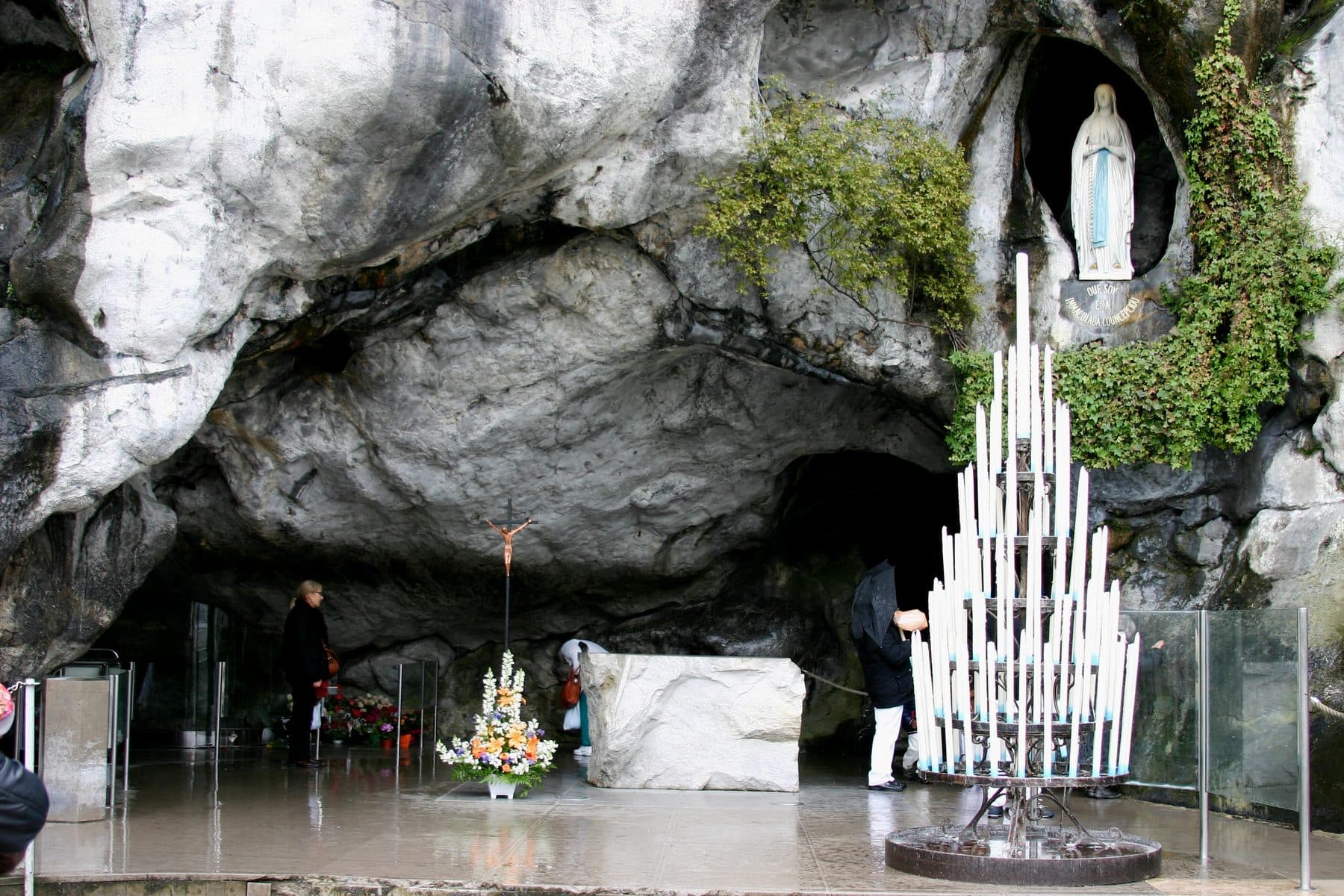
Photo: José Luiz Bernardes Ribeiro / Wikimedia Commons · CC BY-SA 3.0
The story
Skip to the verdict ↓Sister Bernadette Moriau had worn orthopedic braces and taken morphine for a twisted, useless lower body since the 1960s, four spinal operations behind her and a wheelchair beneath her. On the evening of 11 July 2008, back from a pilgrimage to Lourdes, the Franciscan nun felt a warmth move through her — and that night, for the first time in years, she reached down and took the braces off.
Sister Bernadette Moriau, a religious of the Oblate Franciscans of the Sacred Heart of Jesus, had suffered from cauda equina syndrome — compression of the spinal nerve roots controlling the lower body — for most of her adult life. The lower-back pain that opened the illness began in 1966, when she was 27. Between 1968 and 1975 she underwent four operations on her spinal column, none of which restored function; the deficit only worsened, and by the late 1980s she could no longer walk. She used a wheelchair, wore orthopedic braces, had a permanently twisted foot, took high-dose morphine for nerve pain, and required assistance for daily activities. By the 2008 cure she had carried the condition for roughly 42 years.
On July 11, 2008, during a Lourdes pilgrimage, she experienced what she described as a profound warmth and an interior peace. That evening she removed her orthopedic braces for the first time in years. She subsequently recovered full lower-body function, stopped the morphine, and has lived without any of her former limitations since.
The CMIL reviewed her case in November 2016: 20 of the 21 international medical experts voted that her cure was "unexplained in the current state of scientific knowledge." The doctors had previously sent her to neurologists and rheumatologists, repeated her imaging and electrophysiology, and even referred her to two psychiatrists to rule out deception or hallucination. On February 11, 2018 — the 160th anniversary of the Lourdes apparitions — her bishop declared this the 70th official Lourdes miracle.
The published record documents the clinical recovery thoroughly, but no post-cure MRI demonstrating that the structural compression itself had reversed was ever made public; the recovery is established by function and examination rather than by before-and-after imaging.
Hard to explain by nature — and strongly documented.
Reviewer Notes
Miracles Jar weighs each claim two ways — how extraordinary it would be, and how strong the evidence is.
Assessed by Miracles Jar AI
Recognized 2018 as 70th miracle; 20/21 CMIL vote after 10-year follow-up; near-50-year chronic CES with no spontaneous remission mechanism.
Recognized in 2018 as the 70th miracle of Lourdes. The case carries a 20-of-21 CMIL vote after a 10-year follow-up, and a near-50-year chronic cauda equina syndrome (CES) with no spontaneous-remission mechanism. The evidence leans toward authentic, though genuine uncertainty remains.
Why the duration carries the case
Her cauda equina syndrome began in 1966 and was operated on four times between 1968 and 1975, leaving a fixed deficit she carried for the next three decades — by the 2008 cure, roughly 42 years of established symptoms, and 52 years by the 2018 recognition. The neurological natural history runs against spontaneous recovery here: the standard reference (Rider LS, Marra EM, "Cauda Equina and Conus Medullaris Syndromes," StatPearls/NCBI Bookshelf, 2023) states that "the longer the compression continues, the worse the permanent structural and functional impairment," and that an established compressive deficit is only partially reversible even with prompt surgery. After decades of orthopedic dependency a chronic compressive deficit has no documented pathway back. Unlike MS or TB, chronic established CES has no documented spontaneous-remission pathway. This is the strongest point in favor of the cure's authenticity.
Strength of the panel consensus
The CMIL vote in November 2016 was 20 of 21 doctors finding the cure "unexplained in the current state of scientific knowledge" — the highest consensus ratio in modern Lourdes review. The panel is an international multi-specialist body including non-Catholic physicians. The 10-year follow-up satisfies the rigorous longitudinal bar.
The honest weakness — documentary, not mechanistic
No post-cure MRI demonstrating reversed structural compression was ever published, so the recovery is established clinically and functionally but not by before-and-after imaging. This is a documentary gap, not a counter-mechanism; the cure itself is well attested. Per the Martins clinical analysis ("Spontaneous cure of cauda equina syndrome experienced by Sister Bernadette Moriau," 2021), the CMIL requested follow-up X-rays, scans, and an EMG, but no post-cure structural imaging result was ever published; that analysis characterizes her condition as a form of spinal stenosis and documents the gap in published neuroimaging correlation.
The one applicable natural critique
The dynamic-vs-fixed compression objection: if her nerve-root compression was positional or fluctuating rather than a fixed structural lesion, periodic change is theoretically possible. This is the one critique a neurologist would raise, but it is thin given decades of fixed deficit and full orthopedic and wheelchair dependency.
The verdict: Recognized 2018 as 70th miracle; 20/21 CMIL vote after 10-year follow-up; near-50-year chronic CES with no spontaneous remission mechanism.
Evidence ledger — what the verdict rests on
CMIL voted 20 of 21 members finding cure 'unexplained in current state of scientific knowledge' — highest consensus ratio in modern Lourdes review
International multi-specialist panel including non-Catholic physicians
Cauda equina syndrome from 1966, operated four times 1968-1975, then a fixed deficit for ~42 years to the 2008 cure; the natural history (Rider & Marra) is that established compressive deficit only worsens and is at best partially reversible even with surgery
Unlike MS or TB, chronic established CES has no documented spontaneous-remission pathway
No post-cure MRI demonstrating reversed structural compression was published; recovery is documented clinically and functionally rather than by before-and-after imaging
Documentary gap, not a counter-mechanism; the cure itself is well attested
Dynamic vs. fixed compression — if her nerve-root compression was positional or fluctuating rather than fixed, periodic change is theoretically possible
The one applicable neurological critique; thin given decades of fixed deficit and full orthopedic dependency
What would raise the meter: Documented recurrence in cases with no expectancy pathway — or records ruling out functional overlay — would raise the meter.
What would lower it: Evidence of symptom relapse, revised diagnosis, or undisclosed treatment would lower the evidence bar.
How we weigh every claim — the full method, deductions and all →
The natural explanation
The leading natural account for this case is expectation, suggestion & the placebo response. Read what it explains — and where it stops.
Sources
Tagged by proximity to the event. Primary sources are direct or contemporaneous; tertiary are downstream retellings.
- 1.Primarychurch document
"Bishop Orofino Declaration — Diocese of Beauvais, February 11, 2018", 2018· no public link
Official 70th miracle recognition on the 160th anniversary of the apparitions
- 2.Secondarynews
"70th Miracle of Lourdes Affirmed by the Church — Catholic World Report", 2018· no public link
Covers CMIL vote (20/21) and 10-year timeline; cites Vatican News and diocese documents
- 3.Secondarynews
"Meet Sister Bernadette — National Catholic Register/CNA", 2018· no public link
First-person account; details of condition and recovery timeline
- 4.Secondaryacademic
Rider LS, Marra EM, "Cauda Equina and Conus Medullaris Syndromes", StatPearls (NCBI Bookshelf), 2023· no public link
Natural-history reference: 'The longer the compression continues, the worse the permanent structural and functional impairment.' Establishes that established compressive deficit does not resolve spontaneously and is only partially reversible even with prompt surgical decompression.
- 5.Secondaryacademic
Martins, "Spontaneous cure of cauda equina syndrome experienced by Sister Bernadette Moriau (clinical analysis)", 2021· no public link
Notes CMIL requested follow-up X-rays, scans, and an EMG, but no post-cure structural imaging result was ever published; characterizes her condition as a form of spinal stenosis. Documents the gap in published neuroimaging correlation.
Cases like this
Nearest on the map — similar in how miraculous they’d be, and how strong the evidence is.