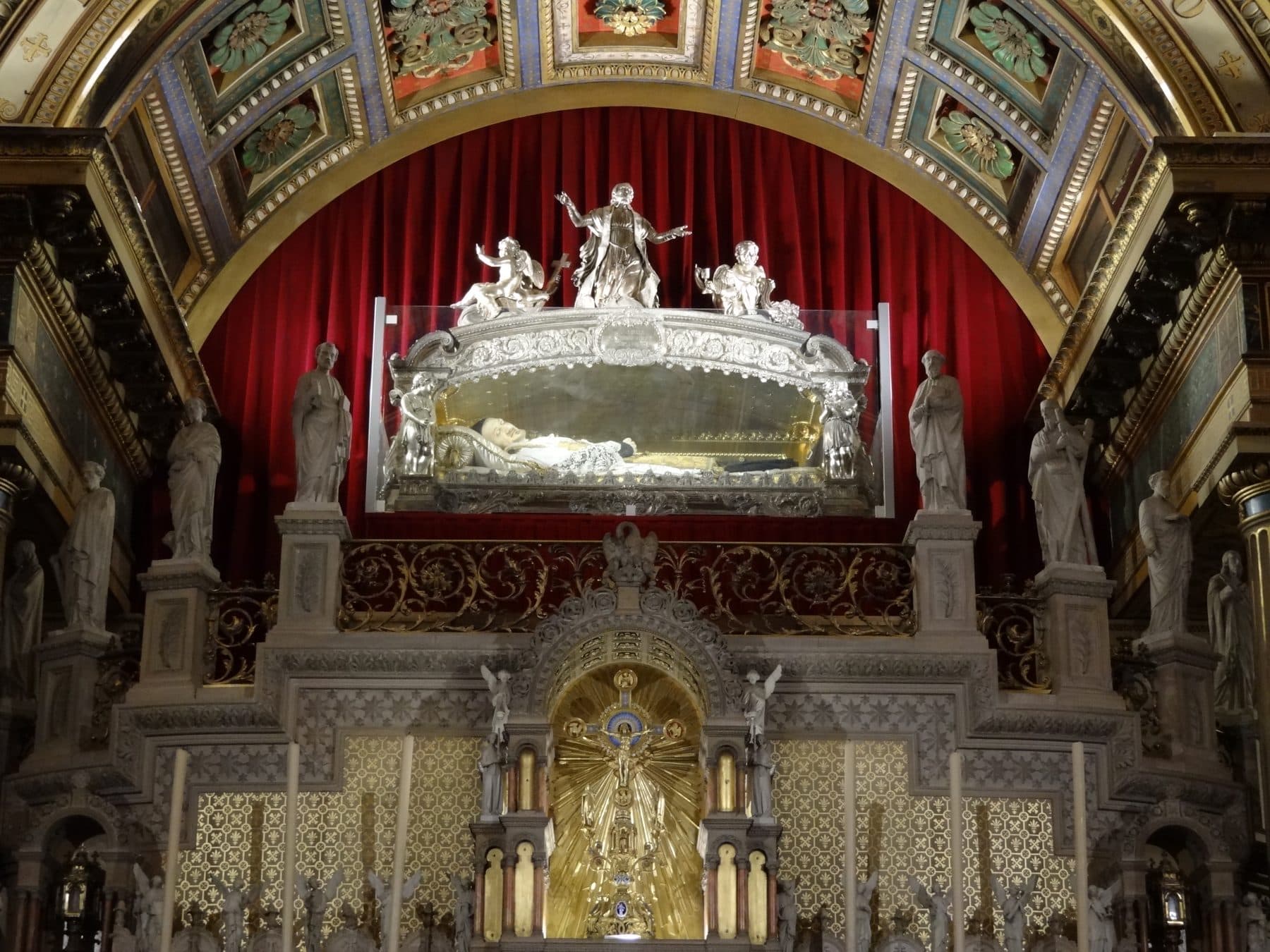
Vincent de Paul — The Skeleton in a Wax Shell
Photo: Antoine Rex / Wikimedia Commons · CC0
The story
Skip to the verdict ↓Vincent de Paul was briefly believed incorrupt, but flooding in the vault caused full decomposition; his disarticulated bones were reassembled by surgeons and are now encased inside a wax effigy at the Vincentian mother house in Paris.
Vincent de Paul, founder of the Vincentian order and the Daughters of Charity, died in 1660. Early reports after his death suggested his body was incorrupt, generating the veneration that led to his beatification. The vault where he was interred then flooded. Upon subsequent inspection, the monks found only a pile of bones.
The disarticulated bones presented a problem: the Vincentians felt only "holy hands" could handle the remains, but faced with an osteological puzzle, they called in surgeons. In 1960, for the 300th anniversary of Vincent's death, his remains were formally cleaned and rearranged in the company of a physician, a notary, and the superior generals of both Vincentian branches.
The "body" visible today in its imposing glass-and-silver vault in the Chapelle de Saint-Vincent-de-Paul at the mother house, 95 rue de Sèvres is a wax effigy commissioned in 1830 from Odiot. Inside the wax figure are the bones — an ex ossibus relic. The visual impression of an intact sleeping body is created by the wax shell.
Vincent de Paul is often listed alongside Bernadette and Catherine Labouré. What stands at the mother house is a reliquary that presents, to a visitor, as a sleeping body.
It happened — and nature accounts for it.
Reviewer Notes
Miracles Jar weighs each claim two ways — how extraordinary it would be, and how strong the evidence is.
Assessed by Miracles Jar AI
Body fully decomposed; only bones remain inside a wax effigy. Incorruptibility claim is false.
Vincent de Paul's body fully decomposed; only bones remain inside a wax effigy. The incorruptibility claim is false in its common formulation, and the intact sleeping-body impression presented to visitors is created entirely by the wax shell.
The body decomposed after vault flooding, leaving disarticulated bones that required surgical reassembly. Initial post-death reports mentioned incorruptibility before the flooding, but those early reports were overtaken by documented decomposition — a confirmed historical fact, not in dispute. Vincent de Paul does not qualify as incorrupt by any definition, and he is arguably the strongest counterexample in the incorruptibles tradition: his body demonstrably did not remain incorrupt.
The skeleton inside the wax effigy at the reliquary is real, but the lifelike figure around it is entirely artificial. What a visitor sees is the wax shell, not the body.
Evidence ledger — what the verdict rests on
Body fully decomposed after vault flooding — reduced to disarticulated bones
Decomposition is confirmed historical fact, not dispute
Bones reassembled by surgeons in 1960 for 300th anniversary of death
Surgical reassembly required because remains were disarticulated
What is displayed is a wax figure containing the bones, not preserved flesh
Wax effigy by goldsmith Odiot, 1830; bones inside as ex ossibus relic
Initial post-death reports mentioned incorruptibility before flooding
These early reports were overtaken by documented decomposition
What would raise the meter: Long-term follow-up documenting permanence, in a condition with a near-zero spontaneous-resolution base rate, would raise the meter.
What would lower it: A documented relapse, or case literature showing the condition fluctuates or remits on its own, would move it down.
How we weigh every claim — the full method, deductions and all →
The natural explanation
The leading natural account for this case is spontaneous remission & the body's own recovery. Read what it explains — and where it stops.
Sources
Tagged by proximity to the event. Primary sources are direct or contemporaneous; tertiary are downstream retellings.
- 1.Secondarynews
"The Misfortunes of Saint Vincent de Paul's Skeleton (Atlas Obscura)", 2016· no public link
Detailed history of decomposition, flooding, surgical reassembly of bones
- 2.Secondaryinvestigation
"Was St. Vincent's Body Preserved from Corruption? (FAMVIN, 2011)", 2011· no public link
Vincentian order's own analysis; confirms no ongoing incorruptibility
- 3.Secondarynews
"The Wax and Bone Relics of Saint Vincent de Paul (Atlas Obscura)", 2017· no public link
Describes current display: silver vault with wax-encased skeleton
Cases like this
Nearest on the map — similar in how miraculous they’d be, and how strong the evidence is.