What it is
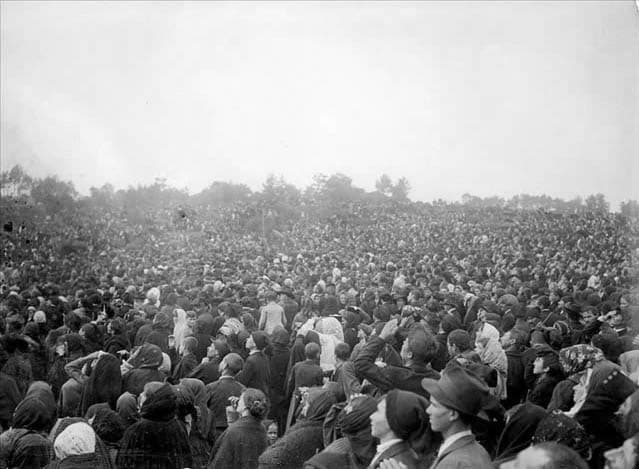
Misperception explains the report rather than the experience. Honest witnesses misread real, ordinary events: optical phenomena (a sun that appears to ‘dance’ when stared at), pareidolia (a face in stone or cloud), and memory that reconstructs and sharpens a story each time it is told. None of it requires anyone to lie.
How reports drift from events
Two patterns recur. First, fiction mistaken for fact: Arthur Machen’s 1914 short story ‘The Bowmen’ became, within months, a widely believed account of angels at Mons — a published invention read back as testimony. Second, narrative accretion and genre: ancient battle poetry, birth-portent conventions, and theological language describe meaning in the idiom of their time, and are later read as literal physical events they were never meant to report.
Where it stops
Misperception is powerful against secondhand legend and crowd phenomena, and weak against durable physical evidence. It explains why the report says what it says; it does not, by itself, dissolve a case with contemporaneous records, multiple independent witnesses, or an object that can still be examined.
How this rival is scored here
This rival lowers the evidence reading for claims that rest on testimony, distance in time, or a single dramatic impression — and has little effect on claims anchored by physical, contemporaneous documentation.
How we rate →