The Delhi Monkey Man: Mass Hysteria as Supernatural Belief
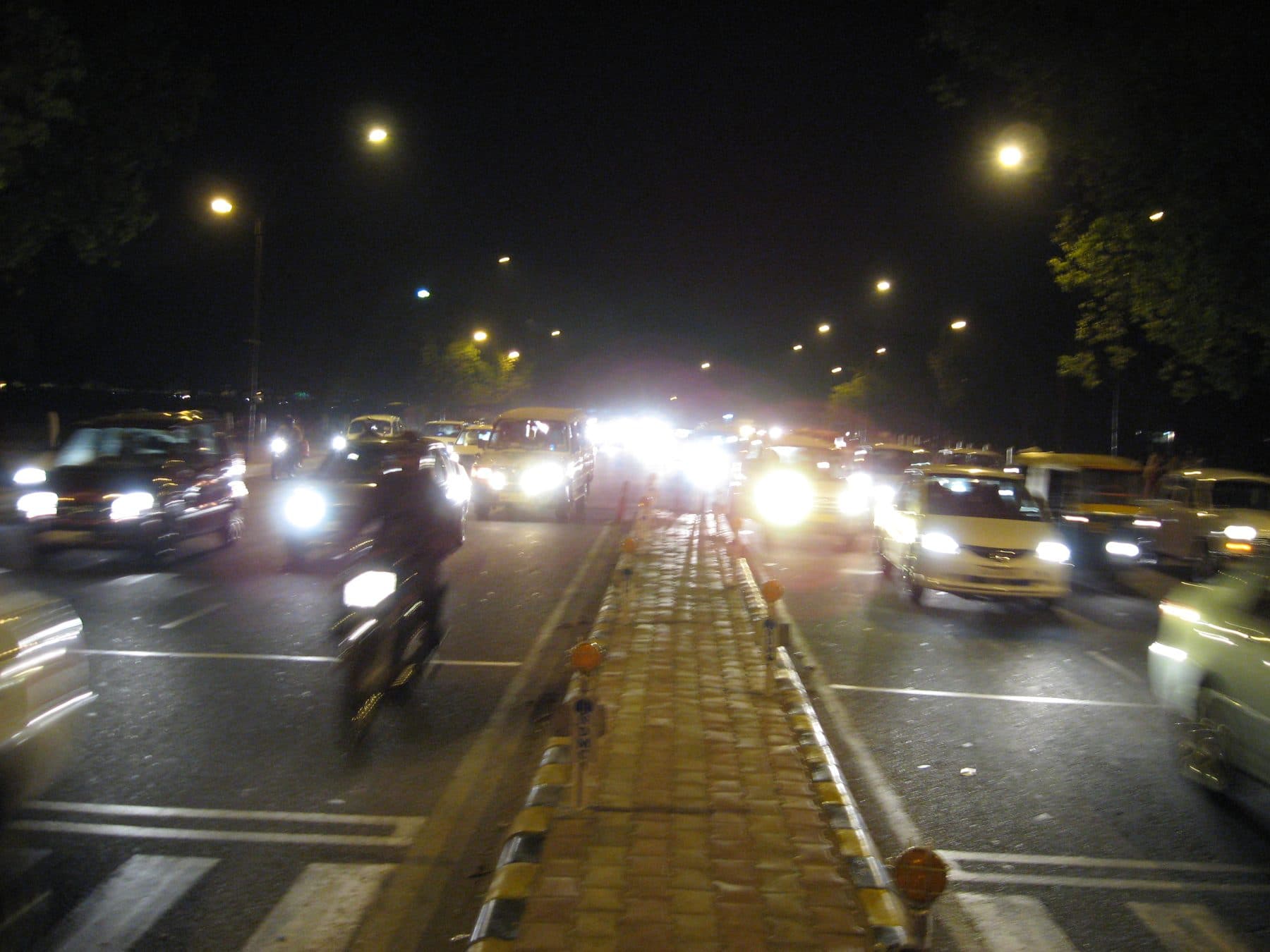
Photo: Gabriele Giuseppini · CC BY 3.0
The story
Skip to the verdict ↓In May 2001, New Delhi was gripped by hundreds of reported attacks by a supernatural monkey-like creature, resulting in documented injuries, two deaths from panic falls, and a landmark academic study of mass psychogenic illness.
In May 2001, reports began circulating in East Delhi that a creature — part-monkey, part-machine — was attacking sleeping residents on rooftops and in alleys. Within two weeks, 397 reports had reached police stations. The Monkey Man was variously described as 4 feet tall with metal claws and glowing red eyes, or 8 feet tall and muscular, leaping between buildings. The eyewitness accounts differed sharply from one another.
Police investigated all reports. They found no fur, no animal tracks, and no bite marks. Of the 52 victims who sought medical treatment, injuries were superficial scratches and lacerations consistent with panicked movement in the dark. Two people died from falls. A 4-foot wandering sadhu was beaten by a mob who mistook him for the creature.
The season had brought intense heat, power outages, and overcrowded rooftop sleeping.
A study published in the *Indian Journal of Medical Science* (2003) examined the East Delhi cases. It diagnosed the event as mass psychogenic illness — the same mechanism cited in accounts of medieval dancing plagues, the Salem witch trials, and documented 20th-century factory illness outbreaks.
Would be extraordinary if real — but it has been positively shown false.
Reviewer Notes
Miracles Jar weighs each claim two ways — how extraordinary it would be, and how strong the evidence is.
Assessed by Miracles Jar AI
Not “low evidence” — positive proof it’s false: positive evidence shows the claimed facts are false.
Mass psychogenic illness (mass hysteria); no physical creature was ever found, caught, or photographed.
The verdict: Mass psychogenic illness; no physical creature was ever found, caught, or photographed.
Medical examination of the 52 injured patients found only minor abrasions and lacerations inconsistent with animal attack — a pattern consistent with self-inflicted scratches or minor falls in the dark, not bites or claw lacerations. Inconsistency is a signature of psychogenic perception: the 397 sightings produced wildly contradictory descriptions — 4 to 8 feet tall, metal claws vs. furry hands, glowing eyes — across different witnesses. The beating of a 4-foot wandering sadhu illustrates how heightened fear produces false identification.
Two people died from panic falls; the deaths are real, confirming the psychological phenomenon had physical consequences.
The peer-reviewed study (Indian Journal of Medical Science, 2003; PubMed PMID 12944693) confirmed mass psychogenic illness as the diagnosis. CNN's 2001 contemporary reporting confirmed the police conclusion ("Indian Police Say Hysteria Created 'Monkey-Man'").
The trigger appears to be a season of intense heat, power outages, and overcrowded rooftop sleeping — conditions that prime people for night-terror and misattribution.
The Monkey Man case is the secular-fear analogue of religious mass miracles. Where crowds at Medjugorje or Fatima report the sun spinning, crowds in East Delhi saw an attacking creature. Both demonstrate that mass shared perception can arise from psychological contagion without any physical stimulus — a baseline for evaluating other group-witness accounts.
Evidence ledger — what the verdict rests on
Medical examination of 52 injured patients found only minor self-consistent-with-self-infliction abrasions; no bites, claw lacerations, or animal-attack patterns
397 sightings produced wildly inconsistent descriptions — 4 to 8 feet tall, metal claws vs. furry hands, glowing eyes — across different witnesses
Inconsistency signature of psychogenic perception
A 4-foot wandering sadhu was beaten by a mob as the 'monkey man' — illustrating how heightened fear produces false identification
Two people died from panic falls; deaths are real, confirming the psychological phenomenon had physical consequences
Deaths confirm the panic was real, not the creature
What would raise the meter: Instrumented or physical evidence — measurements, samples, footage that survives analysis — would raise this.
What would lower it: A controlled observation reproducing the experience naturally (lighting, suggestion, pareidolia) would move it down.
How we weigh every claim — the full method, deductions and all →
The natural explanation
The leading natural account for this case is misperception: how honest witnesses get it wrong. Read what it explains — and where it stops.
The same wonder, across traditions
This claim is one of many that make the same assertion across faiths. See it side by side in When a Figure Appears.
Sources
Tagged by proximity to the event. Primary sources are direct or contemporaneous; tertiary are downstream retellings.
- 1.Secondaryother
"Monkey-man of Delhi", 2024· no public link
Wikipedia with police and medical sourcing
- 2.Primaryacademic
"A Study on Mass Hysteria (Monkey Men?) Victims in East Delhi", 2003· no public link
Indian Journal of Medical Science; PubMed PMID 12944693; peer-reviewed case analysis
- 3.Secondarynews
CNN, "Indian Police Say Hysteria Created 'Monkey-Man'", 2001· no public link
Contemporary reporting confirming police conclusion
Cases like this
Nearest on the map — similar in how miraculous they’d be, and how strong the evidence is.