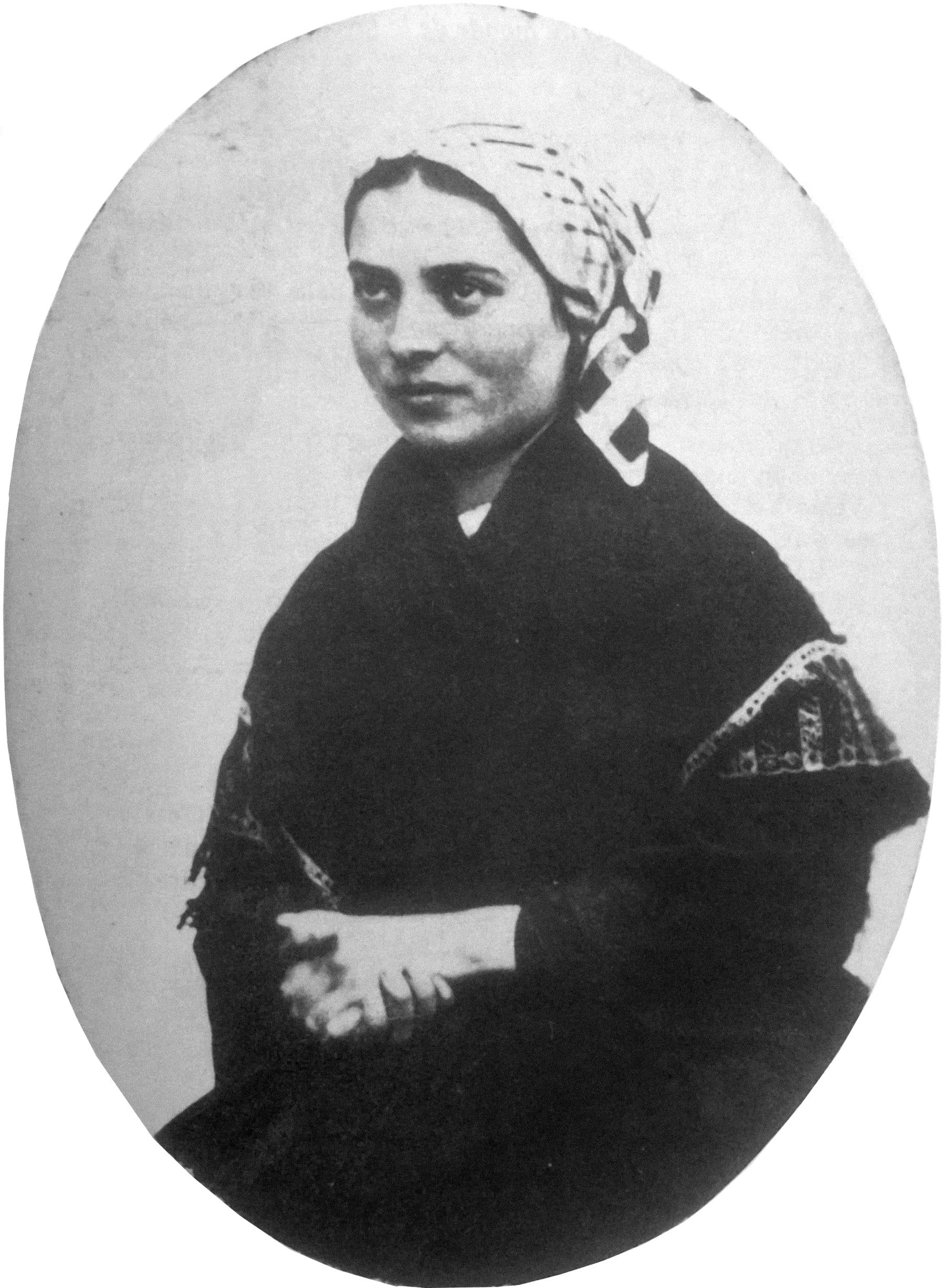
Our Lady of Lourdes (Bernadette Soubirous)
Photo: Auguste Billard-Perrin (1863) / Wikimedia Commons · Public domain
The story
Skip to the verdict ↓In 1858, a 14-year-old French girl reported 18 apparitions of 'a Lady' in a grotto near Lourdes, where a spring emerged that has since been associated with thousands of reported miraculous cures.
On February 11, 1858, Bernadette Soubirous, the 14-year-old daughter of an impoverished former miller, was gathering firewood near the Grotto of Massabielle outside Lourdes when she reported seeing a small young woman in white with a blue sash and golden roses on her feet. The apparitions continued 18 times through July 16. During the March 25 apparition, the figure identified herself as 'Que soy era Immaculada Concepciou' (I am the Immaculate Conception) in the local Gascon dialect.
The Spring and Healing Tradition
During the ninth apparition, Bernadette was directed to dig in the muddy ground; a spring emerged that now flows at approximately 27,000 gallons per day. Since 1858 the spring has attracted over 200 million pilgrims. The Lourdes Medical Bureau, founded by Dr. Henri Boissarie in 1883 with Vatican endorsement, developed a multi-stage verification process: initial medical review at Lourdes, independent peer review, and final judgment by the International Medical Committee of Lourdes (CMIL). Of roughly 7,000 submitted cases, 2,500+ received bureau attention, and 72 have been formally recognized as miraculous by their respective bishops.
The conditions recognized as cured include bone tuberculosis, cancer, and blindness.
Church Recognition
In 1862, after a four-year commission, Bishop Bertrand-Sévère Mascarou Laurence of the Diocese of Tarbes issued an official decree concluding the apparition worthy of belief. Bernadette entered a convent, where she spent her remaining years in obscurity. She was beatified in 1925 and canonized in 1933. Her body is on display at Nevers and shows minimal decay; her remains were treated with wax, and some deterioration was recorded at examination. Lourdes remains the most visited Marian shrine in the world.
It happened — and nature accounts for it.
Reviewer Notes
Miracles Jar weighs each claim two ways — how extraordinary it would be, and how strong the evidence is.
Assessed by Miracles Jar AI
Historically credible testimony; spring-associated cures subject to ongoing medical scrutiny with a small but formally documented unexplained subset.
On Bernadette's testimony. She was rigorously interrogated by civil and ecclesiastical authorities — police, civil authorities, and clergy — and maintained her account with remarkable consistency over years, never seeking personal gain. Consistency under adversarial questioning is a recognized marker of truthful testimony, though it does not rule out sincere but mistaken perception. The four-year episcopal commission (concluded 1862) found her testimony credible.
On the 'Immaculate Conception' claim. Her description of the apparition using the theologically loaded phrase 'I am the Immaculate Conception' — a dogma proclaimed just four years earlier in 1854, which she reportedly did not understand — is treated by some as the strongest claim, and it is impossible to independently verify. This is weighted weak, however: the dogma was widely publicized in French Catholic culture by 1858, and Bernadette had been catechized and could have absorbed the phrase without understanding it.
On the cures (weighing). The Medical Bureau's recognition of 72 cures as medically inexplicable out of 7,000+ submitted cases reflects a deliberately conservative threshold and strict criteria. But 'medically inexplicable' is not equivalent to 'miraculous' — it means no current medical explanation, not that none exists. Historian Jacalyn Duffin's 2012 review (Journal of the History of Medicine) praised the Bureau's methodology as genuinely rigorous compared to typical medical case reporting, but noted that the recognized conditions — bone tuberculosis, cancer, and blindness — do have known (though rare) spontaneous remission pathways. Most recognized Lourdes cures involve conditions (tumors, infections, neurological disorders) with documented spontaneous remission rates. There is a selection-bias consideration: millions of very sick pilgrims have visited, and even rare spontaneous remissions would occur by chance. The 72 recognized cases span 170 years of millions of ill visitors; statistically, some unexplained recoveries would occur by chance. This does not make the cures fabricated, but it limits their force as evidence for supernatural intervention specifically.
On the incorrupt-body claim. The minimal decay of her body at Nevers is a claim pathologists dispute: they note her remains were treated with wax and that some deterioration was recorded at examination.
Evidence ledger — what the verdict rests on
Bernadette maintained her account consistently under hostile interrogation by police, civil authorities, and clergy over years, and gained no material benefit from her claims
Consistency under adversarial questioning is a recognized marker of truthful testimony, though it does not rule out sincere but mistaken perception
Lourdes Medical Bureau has formally recognized 72 cures as medically inexplicable out of 7,000+ submitted cases after rigorous multi-physician review
Criteria are strict; 'medically inexplicable' is not equivalent to 'miraculous' — it means no current medical explanation, not that none exists
Most recognized Lourdes cures involve conditions (tumors, infections, neurological disorders) that have documented rates of spontaneous remission
Selection bias: millions of very sick pilgrims have visited; even rare spontaneous remissions would occur by chance
Bernadette described the apparition using the theologically loaded phrase 'I am the Immaculate Conception' — a dogma proclaimed just four years earlier in 1854, which she reportedly did not understand
Weak because: the dogma was widely publicized in French Catholic culture by 1858; Bernadette had been catechized and could have absorbed the phrase without understanding it
What would raise the meter: Instrumented or physical evidence — measurements, samples, footage that survives analysis — would raise this.
What would lower it: A controlled observation reproducing the experience naturally (lighting, suggestion, pareidolia) would move it down.
How we weigh every claim — the full method, deductions and all →
The natural explanation
The leading natural account for this case is misperception: how honest witnesses get it wrong. Read what it explains — and where it stops.
The same wonder, across traditions
This claim is one of many that make the same assertion across faiths. See it side by side in When a Figure Appears.
Sources
Tagged by proximity to the event. Primary sources are direct or contemporaneous; tertiary are downstream retellings.
- 1.Secondaryacademic
Laurentin, René, "Bernadette of Lourdes", 1979· no public link
Standard scholarly biography; Laurentin also produced the multi-volume critical history of Lourdes
- 2.Secondaryacademic
Jacalyn Duffin, "The Lourdes Medical Cures Revisited", 2012· no public link
Published in Journal of the History of Medicine; critical review of the Medical Bureau's methodology and case selection
- 3.Primarychurch document
Bishop Bertrand-Sévère Mascarou Laurence, "Recognition of the Apparitions by the Diocese of Tarbes", 1862· no public link
Official decree after four-year commission; concludes apparition worthy of belief
Cases like this
Nearest on the map — similar in how miraculous they’d be, and how strong the evidence is.