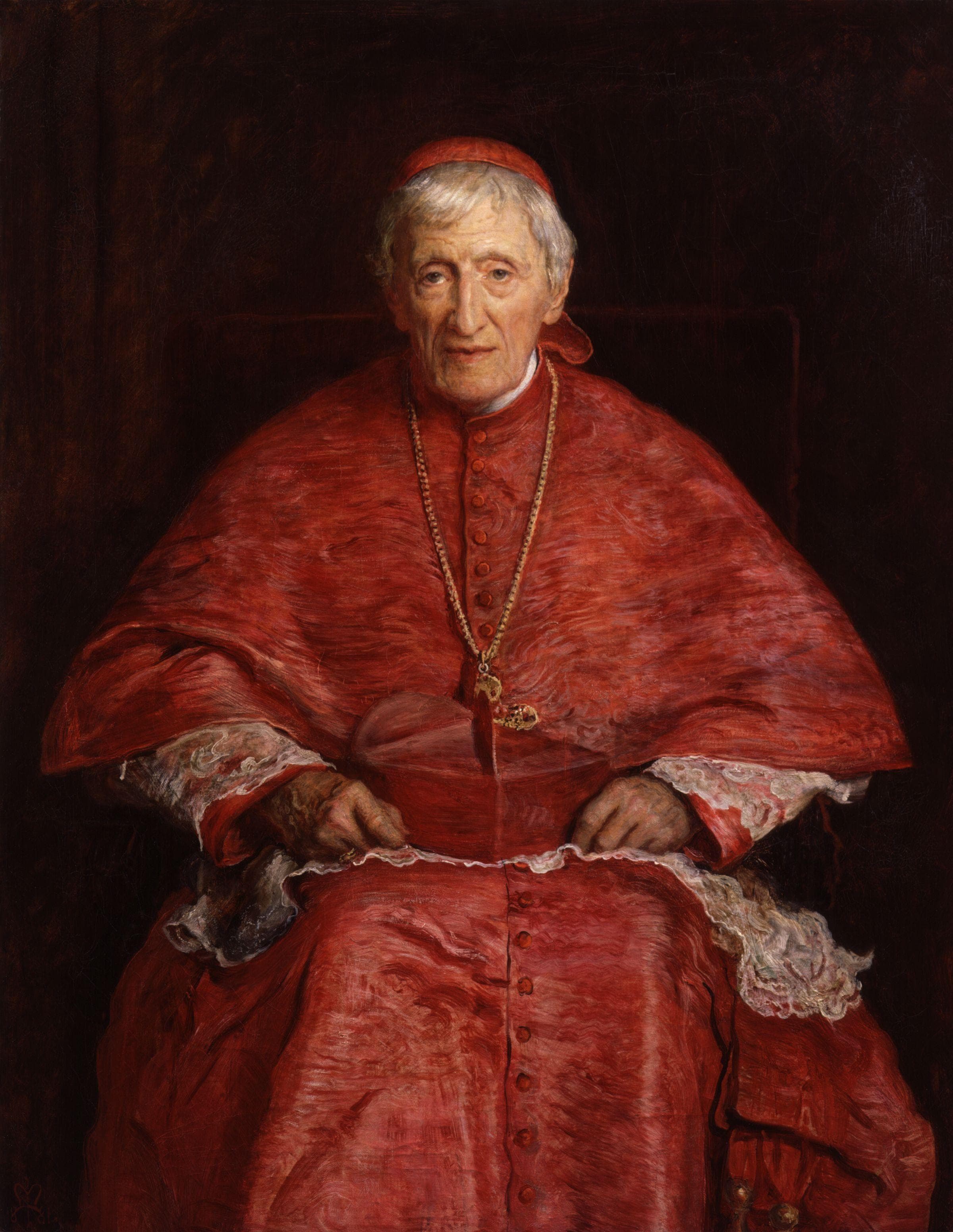
Melissa Villalobos: Placental Abruption Bleeding Stops Instantly After Newman Prayer
Photo: John Everett Millais · Public domain
The story
Skip to the verdict ↓A Chicago lawyer hemorrhaging from a partial placental abruption was instantly stopped — and the tear subsequently found to have disappeared — after a brief prayer to Blessed John Henry Newman.
Melissa Villalobos, a lawyer living near Chicago, was in her fifth pregnancy in 2013 when she began bleeding heavily, alone at home with her other children. Earlier ultrasounds had already shown trouble: the placenta had partly torn away from the wall of the uterus, and a clot — a subchorionic hematoma — had collected from the bleeding, reported at roughly two and a half times the size of the baby. On the day of the worst bleed she was too weak to reach help, and she prayed simply, "Please, Cardinal Newman, make the bleeding stop." By her account it stopped at once, and she noticed a strong scent of roses.
At a follow-up ultrasound her obstetrician found the tear gone and the pregnancy sound. The baby, a girl named Gemma, was born healthy that December; mother and daughter have had no trouble since, and Gemma attended the canonization Mass with her family on October 13, 2019. Pope Francis approved the miracle on February 13, 2019, and John Henry Newman was canonized that October — the first English person canonized in decades.
The placental abruption was documented as partial, with the size of the subchorionic clot recorded but no formal severity grade assigned to the abruption. Standard obstetric references hold that a placental abruption can be neither confirmed nor ruled out by ultrasound alone, because fresh bleeding on the scan looks much like ordinary placental tissue. The original ultrasounds and the obstetric file have remained inside the canonization process and have not been released for independent review. Villalobos has told the story consistently for years.
The scent of roses is recorded as a reported detail. It is a recurring motif in healing accounts of this kind — most famously the "odor of sanctity" long tied to Padre Pio — and by its nature it cannot be independently checked.
Extraordinary if it happened as told — but the evidence can't fully confirm it.
Reviewer Notes
Miracles Jar weighs each claim two ways — how extraordinary it would be, and how strong the evidence is.
Assessed by Miracles Jar AI
A well-defined, testable claim — bleeding stopping at once and the placental tear resolving — but the record gives the clot's size without a severity grade, and the imaging that would settle it was never released for outside review.
The case is genuinely uncertain — a well-defined, testable claim resting on imaging no independent reader has seen.
Why the claim is unusually testable. The salient claim is the pairing of two events: active hemorrhage from a documented partial placental abruption stopping within seconds of prayer, and the structural tear being absent on subsequent imaging. If both are accurate, no single natural mechanism accounts for the two occurring together. The Vatican Dicastery approved the cure as "scientifically inexplicable" in February 2019. That concreteness is the case's strength.
Why the obstetric details cut the other way. The record gives the clot's size but never assigns the abruption a formal severity grade, and the difference is decisive: a mild, partial separation in a stable patient is the kind obstetric guidance manages expectantly — by watching and waiting — because such cases can settle on their own, while a severe one does not. A Class 1 bleed that stabilized versus a Class 3 with no natural course would change the analysis entirely, and the grade was never published. Compounding this, the standard reference (StatPearls, Page/Sher Class 0–3 grading) holds that abruption cannot be confirmed or excluded by ultrasound alone, since a fresh bleed resembles normal placental tissue — so a small surviving tear could have been missed on the follow-up scan.
The roses detail carries no evidentiary weight. It belongs in the record as a reported detail, not as evidence. The scent of roses recurs across saintly-healing accounts — the "odor of sanctity" associated with Padre Pio, whose intercession cases (Consiglia De Martino among them) sit alongside this one in the canonization record — rather than being a finding specific to this case, and it is not independently verifiable.
Bottom line. A mixed record: a well-defined, testable claim resting on imaging no independent reader has seen. The original and follow-up imaging stayed inside the canonization process and outside independent review. Villalobos has told the story consistently for years, but the documentation that would let an outsider weigh it has not been released. That is why the case sits near even — a near-even split — with the assessment well-grounded in what the record actually shows.
Evidence ledger — what the verdict rests on
Active hemorrhage from documented partial placental abruption stopped within seconds of prayer; subsequent imaging found no tear.
If both claims are accurate (hemorrhage stopped + tear resolved), no natural mechanism accounts for simultaneous events.
Vatican Dicastery approved the cure as 'scientifically inexplicable' in February 2019.
A mild, partial abruption in a stable patient is the kind obstetric guidance manages expectantly — such cases can stabilize on their own — and the record gives the clot's size but never a formal severity grade.
The standard reference holds that abruption cannot be confirmed or excluded by ultrasound alone, since a fresh bleed resembles normal placental tissue — so a small surviving tear could be missed. A Class 1 versus a Class 3 abruption would change the analysis entirely, and the grade was never published.
Villalobos reported a strong scent of roses just as the bleeding stopped — a detail that recurs across saintly-healing accounts rather than a finding specific to this case.
The scent of roses is a recurring motif in such reports — most famously the 'odor of sanctity' long associated with Padre Pio, whose intercession cases (Consiglia De Martino among them) sit alongside this one in the canonization record — and it is not independently verifiable.
What would raise the meter: Independent diagnostic confirmation from before the event — imaging, biopsy, a second named clinician — would raise this substantially.
What would lower it: Records showing the original diagnosis was provisional or never independently confirmed would move it down.
How we weigh every claim — the full method, deductions and all →
The natural explanation
The leading natural account for this case is misdiagnosis & the overstated prognosis. Read what it explains — and where it stops.
Sources
Tagged by proximity to the event. Primary sources are direct or contemporaneous; tertiary are downstream retellings.
- 1.Secondarynews
Chicago Catholic, "Local Woman's Cure Leads to Cardinal Newman Canonization", 2019· no public link
Regional Catholic outlet; first reporter to profile Villalobos.
- 2.Secondarynews
Catholic News Agency, "The Lifesaving Miracle That Led to St. John Henry Newman's Canonization", 2019· no public link
Full narrative account; Catholic-aligned.
- 3.Primarychurch document
"Miracle for Canonisation", 2019· no public link
Official Newman Canonisation website; most direct source for her account, including the subchorionic clot reported at about two and a half times the size of the baby.
- 4.Secondaryacademic
Sullivan, Skelly & Rouse, "Placental Abruption", StatPearls (NIH/NCBI Bookshelf), 2025· no public link
Grades abruption Class 0–3 (Page/Sher); mild, partial cases in stable patients may be managed expectantly. States the diagnosis cannot be confirmed or discarded on ultrasound alone, because a fresh bleed looks like surrounding placental tissue — the reason a small surviving tear can be missed.
Cases like this
Nearest on the map — similar in how miraculous they’d be, and how strong the evidence is.